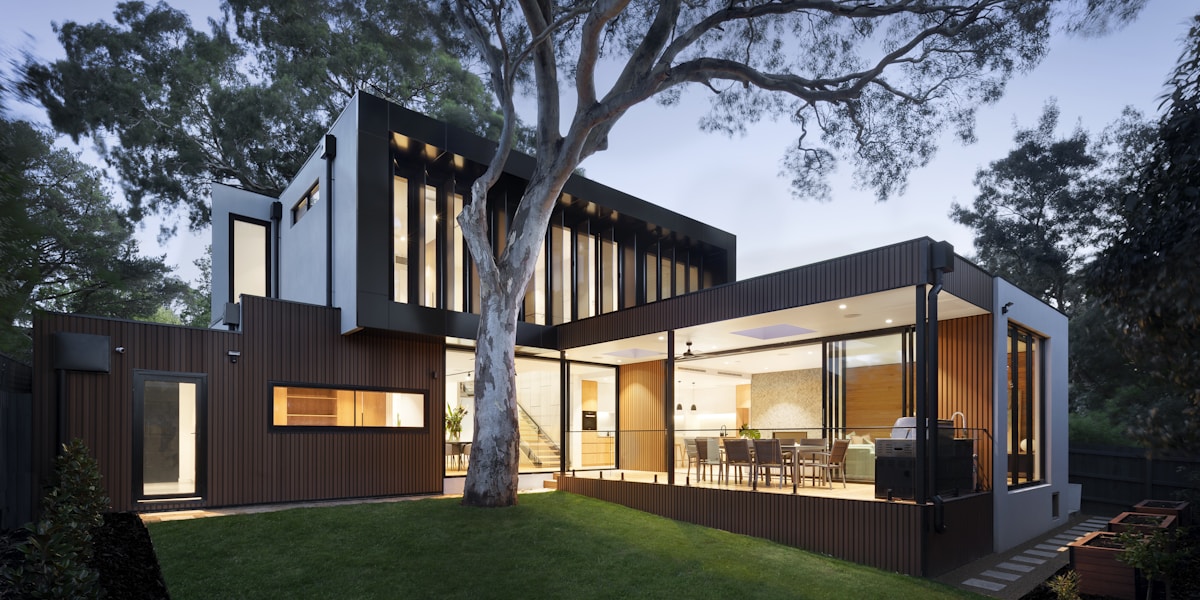
San Diego 2026 Home Renovation Trends: Coastal Japandi Design, Heat Pump HVAC, and 800-1200 sq ft Detached ADUs
San Diego's home renovation market in 2026 is experiencing a dramatic shift as homeowners in Pacific Beach, La Jolla, Mission Beach, and Bird Rock embrace three transformative trends that combine aesthetic sophistication with practical sustainability. Leading local contractors report that the Coastal Japandi aesthetic—blending Japanese minimalism with California coastal warmth—now dominates design boards across coastal neighborhoods. Meanwhile, sustainability upgrades have evolved beyond basic solar installations to include comprehensive battery storage systems like Tesla Powerwall 3 or Enphase IQ batteries (typically 2-3 units per home), paired with heat pump HVAC systems backed by federal tax credits covering 30% of installation costs.
San Diego's home renovation market in 2026 is experiencing a dramatic shift as homeowners in Pacific Beach, La Jolla, Mission Beach, Bird Rock, and Tourmaline Surfing Park embrace three transformative trends that combine aesthetic sophistication with practical sustainability. Leading local contractors report that the Coastal Japandi aesthetic—blending Japanese minimalism with California coastal warmth—now dominates design boards across coastal neighborhoods. Meanwhile, sustainability upgrades have evolved beyond basic solar installations to include comprehensive battery storage systems like Tesla Powerwall 3 or Enphase IQ batteries (typically 2-3 units per home), paired with heat pump HVAC systems backed by federal tax credits covering 30% of installation costs. Perhaps most notably, ADU construction has shifted toward larger, fully detached 800-1,200 square foot units functioning as standalone rental properties, home offices, or aging-in-place housing, complete with separate solar systems and dedicated EV charging stations. With the 2025 California Building Standards Code now applying to all projects submitted after January 1, 2026, and San Diego's Express Plan Check program accelerating permit reviews by 40-50%, the timing has never been better for Pacific Beach homeowners to implement these high-value home renovations.
What is Coastal Japandi Design and How to Implement It in Pacific Beach Homes

Coastal Japandi represents the evolution of two popular design philosophies—Japanese Wabi-Sabi minimalism and Scandinavian hygge warmth—adapted specifically for Southern California coastal living. This aesthetic has become the dominant interior design trend in high-end San Diego kitchen remodels and whole-home renovations throughout 2026, as homeowners seek spaces that balance serenity with functionality.
Material Palette and Color Scheme
The foundation of Coastal Japandi lies in its material palette. White Oak and Ash serve as the primary woods, offering light-to-medium warm tones with visible grain patterns that perfectly mirror the Wabi-Sabi philosophy of finding beauty in natural imperfection. These woods appear in custom cabinetry, floating shelves, and accent walls throughout Pacific Beach renovations. The color scheme has shifted warmer in 2026, moving beyond the stark whites of previous years to embrace richer earth tones including terracotta accents, aged brass hardware, and honey-toned wood finishes.
Key material selections for coastal implementations include raw, natural elements drawn from wood, clay, linen, stone, and organic textiles. The palette features soft beiges, taupes, and mushroom grays balanced with grounding tones like charcoal, walnut, or deep olive green. Coastal-specific additions incorporate muted ocean blues and warm grays reflecting sand and sea elements, with light wood, linen, ceramic, and rattan pieces adding warmth and texture.
Salt-Air Resistant Materials for Coastal Homes
For Pacific Beach and La Jolla homes specifically, implementing Coastal Japandi requires careful attention to salt-air resistance. All metal components—including cabinet hardware, light fixtures, and decorative elements—should utilize 316 stainless steel containing 2-3% molybdenum for superior corrosion resistance. Window frames must be aluminum or coated steel with marine-grade finishes rather than standard materials that corrode within years in coastal environments.
The aesthetic emphasizes negative space, sculptural shapes, and soft lighting to create peaceful, clutter-free environments. Built-in storage solutions maintain the minimalist visual while accommodating the practical needs of family living. Lime-wash walls have become particularly popular in 2026 Pacific Beach ADU projects, providing subtle texture that complements the warm wood tones while reflecting natural light throughout smaller spaces.
Battery Storage Systems for Pacific Beach & La Jolla Homes: Tesla Powerwall 3 vs Enphase IQ

Battery storage has become the centerpiece of sustainable home upgrades in 2026, with San Diego homeowners typically installing 2-3 battery units to achieve whole-home backup capability and time-of-use energy optimization. The two dominant systems—Tesla Powerwall 3 and Enphase IQ Battery—offer distinct advantages depending on existing solar infrastructure and backup power requirements.
Tesla Powerwall 3 Specifications
The Tesla Powerwall 3 costs $15,400 installed and delivers 13.5 kWh of usable capacity per unit with 11.5 kW continuous output. This substantial output means a single Powerwall 3 can back up an entire house including air conditioning during grid outages—a critical consideration for Pacific Beach homes during summer heat events or PSPS (Public Safety Power Shutoff) periods. The integrated inverter design allows solar panels to connect directly to the Powerwall without requiring a separate string inverter, simplifying installation. Tesla-certified crews complete typical installations in 4-6 hours, and expansion packs ($5,900 each) can add capacity without requiring another inverter.
Enphase IQ Battery Configuration Options
The Enphase IQ Battery system offers more modular flexibility with two primary models. The IQ Battery 5P costs $8,500 installed and provides 5 kWh of usable capacity, while the larger IQ Battery 10C costs $13,000 installed with 10 kWh usable capacity and 7.08 kVA continuous output. Homeowners can install up to eight Enphase units for 80 kWh total capacity, making the system highly scalable. However, Enphase batteries require an IQ System Controller ($1,000-$1,500 in additional hardware and labor) to coordinate the battery bank with existing Enphase microinverter systems.
The federal Clean Energy Credit provides a 30% tax reduction on total system costs including equipment, installation labor, and permitting fees. This incentive applies whether batteries are installed with solar panels or as standalone grid-charged backup systems—a significant advantage for homeowners who already completed solar installations in previous years. For a typical 2-battery Tesla Powerwall 3 system ($30,800 before incentives), the federal tax credit reduces net cost to $21,560. For a 3-battery Enphase IQ 10C configuration ($39,000 plus $1,200 controller before incentives), the net cost after the 30% federal credit becomes $28,140.
Most Pacific Beach and La Jolla contractors recommend 2-3 batteries for typical 1,800-2,400 square foot homes to achieve 1-2 days of backup power during grid outages while maintaining essential loads including refrigeration, lighting, Wi-Fi, and HVAC. For homes with heat pump systems or EV charging needs, three batteries provide more comfortable margins during extended outages.
| Feature | Tesla Powerwall 3 | Enphase IQ 5P | Enphase IQ 10C |
|---|---|---|---|
| Installation Cost | $15,400 | $8,500 | $13,000 |
| Usable Capacity | 13.5 kWh | 5 kWh | 10 kWh |
| Continuous Output | 11.5 kW | 3.84 kVA | 7.08 kVA |
| Maximum Units | Multiple + expansion packs | Up to 8 units (40 kWh) | Up to 8 units (80 kWh) |
| Inverter Type | Integrated (no separate inverter needed) | Requires IQ System Controller ($1,000-$1,500) | Requires IQ System Controller ($1,000-$1,500) |
| Installation Time | 4-6 hours (Tesla-certified crews) | Similar to 5P - wall-mount configuration | Similar to 5P - wall-mount configuration |
| Whole-Home Backup (including AC) | Yes - single unit | No - requires 2-3 units | Yes - single unit or 2 units |
| Federal Tax Credit (30%) | $10,780 net cost | $5,950 net cost | $9,100 net cost |
| Best For | Maximum backup from single unit; new solar installations | Existing Enphase systems; budget-conscious buyers | Existing Enphase systems; scalable backup needs |
| Typical Pacific Beach Configuration | 2-3 units ($21,560-$32,340 after tax credit) | 4-6 units ($23,800-$35,700 after tax credit) | 2-3 units ($18,200-$27,300 after tax credit) |
Heat Pump HVAC and Water Heating Systems: Federal Tax Credits and Utility Rebates

Heat pump technology has emerged as the leading HVAC solution for San Diego renovations in 2026, driven by substantial energy savings and remaining incentive programs despite the expiration of some federal credits. These systems provide both heating and cooling from a single unit while consuming 50-75% less energy than traditional gas furnaces and electric resistance heating.
Heat pump HVAC systems deliver 11.5 kW continuous output in typical residential installations, providing whole-home climate control even during peak summer temperatures in coastal neighborhoods. The technology works by transferring heat rather than generating it through combustion, making it far more efficient than conventional systems. For Pacific Beach homes, this translates to annual energy savings of $800-$1,400 compared to traditional HVAC systems, with the differential increasing as utility rates rise.
The federal Section 25C tax credit (up to $2,000, or 30% of installation cost) expired December 31, 2025, eliminating what had been a primary incentive for heat pump adoption. However, geothermal heat pumps remain eligible for a 30% federal tax credit through 2032 under Section 25D, though these systems are rarely installed in residential California properties due to space and geological constraints.
Utility rebates remain the most accessible incentive path in 2026. SMUD (Sacramento Municipal Utility District) offers up to $3,000 for gas-to-electric heat pump HVAC conversions. Southern California utilities including PG&E, SCE, and SDG&E each offer programs in the $500-$1,500 range for qualifying installations. These utility rebates stack with other local incentives to reduce net installation costs by 20-35%.
Heat pump water heaters represent another high-value upgrade, costing $3,200-$5,500 installed and requiring dedicated electrical circuits ($450-$650) plus adequate space for air circulation. A typical installation breaks down to equipment ($2,200), labor ($1,100), materials ($220), permit ($300), and disposal of the existing water heater ($150). California rebates of $300-$500 are available to improve the value proposition, with a net cost of approximately $4,020 after rebates for most installations.
While California's statewide programs TECH Clean California and HEEHRA Phase I became fully reserved for single-family homes on February 24, 2026, utility-specific programs remain active. SCE's Energy Savings Assistance (ESA) program covers heat pump water heater replacement at no cost for income-qualified customers, including installation by authorized contractors. Future programs including HOMES (approximately $291 million) and HEEHRA Phase II ($152 million) are funded but have not yet launched as of August 2026.
For Pacific Beach homeowners planning comprehensive renovations, combining heat pump HVAC and water heating upgrades with battery storage creates a highly efficient, resilient home energy system. The integrated approach maximizes the value of battery backup by reducing overall energy consumption during grid outages.
800-1200 Square Foot Detached ADU Design in San Diego Coastal Neighborhoods: Floor Plans and ROI

ADU construction in San Diego has evolved dramatically in 2026, with the market shifting decisively toward larger, fully detached units in the 800-1,200 square foot range. These substantial structures function as true standalone residences rather than auxiliary spaces, creating exceptional value through rental income, multigenerational living arrangements, or home office functionality.
San Diego regulations permit detached ADUs up to 1,200 square feet maximum, with rear setback requirements of approximately 4 feet and parking requirements that vary by unit size and location. The construction cost typically ranges from $300-$600 per square foot depending on finish level and site conditions, translating to total project costs of $375,000-$450,000+ for turnkey construction including design, permits, sitework, and utilities.
A typical $400,000 detached ADU budget breaks down into distinct components. Design and architectural services consume 6-9% ($24,000-$36,000), while permits and city fees represent 5-9% ($20,000-$36,000). Sitework and foundation account for 12-18% ($48,000-$72,000)—a particularly significant cost in coastal areas like Pacific Beach where soil conditions and drainage requirements increase foundation complexity.
| Cost Component | Percentage of Budget | Amount on $400,000 ADU |
|---|---|---|
| Design & Architectural Services | 6-9% | $24,000 - $36,000 |
| Permits & City Fees | 5-9% | $20,000 - $36,000 |
| Sitework & Foundation | 12-18% | $48,000 - $72,000 |
| Framing & Structure | 18-22% | $72,000 - $88,000 |
| Utilities & Systems | 15-18% | $60,000 - $72,000 |
| Interior Finishes | 25-30% | $100,000 - $120,000 |
| Contingency | 5-8% | $20,000 - $32,000 |
Floor plan configurations in the 800-1,200 square foot range typically include 2 bedrooms and 2 bathrooms with open-concept living, dining, and kitchen areas. The larger footprint allows for premium amenities that substantially increase rental appeal and long-term property value. These features include full-size washer/dryer installations, dedicated office nooks with built-in desks and shelving, covered outdoor living areas (8x12 feet typical), and upgraded kitchen packages with stone countertops, stainless appliances, and custom cabinetry.
Rental income potential represents the primary ROI driver for large detached ADUs in Pacific Beach neighborhoods. One-bedroom ADUs in San Diego typically rent for $2,400-$3,400 per month in 2026 depending on neighborhood and amenities, while 2-bedroom units in the 800-1,200 square foot range command $3,000-$4,200 monthly. Properties near Tourmaline Surfing Park and Crystal Pier command premium rents at the higher end of this range due to proximity to beach access and surf breaks. At $3,600 average monthly rent ($43,200 annually) on a $400,000 construction cost, the gross yield reaches 10.8%—exceptional by San Diego real estate standards.
The 2026 trend toward separate solar and battery systems for large ADUs enhances both energy independence and tenant appeal. A dedicated 4-6 kW solar array with 1-2 battery units allows the ADU to operate independently during grid outages and can include utility costs in the rental rate, simplifying tenant billing while demonstrating the property's sustainability credentials. For Pacific Beach properties targeting environmentally conscious tenants, this feature significantly reduces vacancy periods and supports premium rental rates.
EV charging stations add another layer of tenant appeal and future-proofing. Level 2 charging stations cost $3,500-$15,000 per port including equipment and installation, with EV-owning tenants renewing leases at 15-25% higher rates than those requiring alternative charging arrangements. The reduced turnover saves $2,000-$4,000 in vacancy and marketing costs per avoided move, creating substantial long-term value even before accounting for monthly charging fee revenue.
2025 Building Code Implementation and Express Plan Check Acceleration
Navigating San Diego's building code and permit processes represents a critical success factor for 2026 renovation projects, with recent code updates and acceleration programs creating both challenges and opportunities for Pacific Beach homeowners.
The 2025 California Building Standards Code officially took effect January 1, 2026, applying to all projects submitted on or after that date. San Diego's local amendments to the state code are expected to be finalized and in effect by March or April 2026, creating a transitional period where contractors must carefully track which version applies to active projects. These amendments typically address coastal-specific requirements including enhanced wind resistance standards, salt-air corrosion protection, and drainage provisions relevant to Pacific Beach, La Jolla, and Mission Beach neighborhoods.
The Express Plan Check program provides significant timing advantages for qualifying projects. This paid service delivers review times that are typically 40-50% faster than standard processing, representing the difference between 6-8 weeks and 3-4 weeks for initial plan approval. Express Plan Check is available for most permit types upon payment of an Express Plan Check administrative fee plus 1.5 times the regular plan check fee. The service includes the initial submittal and up to two rechecks—sufficient for most well-prepared applications.
For a typical large detached ADU project, Express Plan Check might add $2,000-$3,500 to total permit costs (on a base of $20,000-$36,000 in standard fees), but the 4-6 week time savings translates to meaningful cost avoidance. Construction loan interest, temporary housing costs during whole-home renovations, and general contractor scheduling premiums can easily exceed $5,000-$8,000 during a 4-6 week delay, making Express Plan Check highly cost-effective for most substantial projects.
Beyond Express Plan Check, San Diego offers additional acceleration tracks for specific project types. DSD (Development Services Department) provides multiple review options ranging from Rapid Review for simple residential work to full in-house review for complex commercial projects. Projects qualifying as 100% Affordable Housing and Emergency Shelter developments receive special expedited processing at no additional cost.
For Pacific Beach homeowners planning 2026 renovation projects, the optimal permit strategy typically involves:
- Engaging a licensed architect or designer familiar with 2025 California Building Code and San Diego local amendments by early Q2 2026 to ensure local provisions are incorporated
- Utilizing Express Plan Check for projects with tight timelines or construction financing
- Coordinating permit submittals to align with contractor availability during shoulder seasons (October-November or March-April) when both permit reviewers and construction crews have more capacity
- Preparing comprehensive initial submittals with all required documentation to minimize recheck cycles
The City recommends reviewing Information Bulletin 700 and contacting the Development Services Department directly for current fees and project-specific eligibility requirements, as programs and pricing are updated periodically.
Coastal Construction Materials for Pacific Beach, La Jolla & Mission Beach: Salt-Air Resistance

Coastal construction in Pacific Beach, Tourmaline Surfing Park, La Jolla, and Mission Beach demands specialized material selections that account for aggressive salt-air exposure, with proper specifications adding 15-25% to project costs while ensuring decades of maintenance-free performance.
Metal Components and Hardware Specifications
Metal components represent the primary vulnerability in coastal environments. All fasteners should utilize hot-dipped galvanized, stainless steel, or approved corrosion-resistant coatings rather than standard zinc-plated hardware that fails within 2-3 years. Metal connectors—including the Simpson Strong-Tie brackets and hurricane ties required by San Diego building code—must specify ZMAX or stainless finish options. Flashing for windows, doors, and roof penetrations should be stainless steel, copper, or coated aluminum; standard galvanized flashing develops corrosion pitting within 5-7 years in salt-air environments.
For Coastal Japandi renovations incorporating decorative metal elements, 316 stainless steel containing 2-3% molybdenum provides superior corrosion resistance compared to standard 304 stainless steel. This specification applies to cabinet hardware, light fixtures, door handles, towel bars, and any exposed metal finishes. The material cost premium runs 40-60% versus standard stainless, but the performance differential is dramatic in locations within 1-2 miles of the ocean.
Roofing material selection critically impacts long-term maintenance costs. Tile—either concrete or clay—ranks as the top-performing material for most coastal San Diego homes. Tile doesn't corrode, rust, or absorb salt the way metal or organic materials can, with concrete tile typically lasting 40-50 years even in severe salt-air exposure. Asphalt composition shingles, while initially less expensive, experience accelerated degradation in coastal zones with expected lifespans of 12-18 years versus 20-25 years inland.
Window and door systems require aluminum frames or coated steel with marine-grade finishes. Vinyl window frames, while popular in inland areas, can become brittle and crack under combined UV and salt exposure within 10-15 years. Aluminum frames with factory-applied fluoropolymer coatings (similar to automotive finishes) provide superior durability, and many manufacturers offer specific "coastal" or "marine" series designed for oceanfront applications.
Concrete specifications for foundations, driveways, and hardscaping should specify 4,000+ PSI reinforced concrete with silane-siloxane sealers to exceed industry standards for longevity. Standard 3,000 PSI concrete develops surface spalling and rebar corrosion more rapidly when exposed to salt-laden moisture that penetrates through capillary action.
For large detached ADU projects incorporating Coastal Japandi aesthetics, the material strategy should integrate these durable coastal specifications with the design palette. White Oak and Ash woods can be protected with marine-grade urethane finishes that maintain the natural appearance while preventing moisture intrusion and surface degradation. Aged brass hardware should specify solid brass with clear protective coatings rather than brass-plated steel that corrodes from the substrate outward.
The 15-25% cost premium for coastal-grade materials represents genuine value creation. A $400,000 ADU built with standard inland specifications might require $40,000-$60,000 in remedial work within 7-10 years to address corroded fasteners, failed flashing, deteriorated windows, and compromised roofing. The same project built correctly with coastal specifications adds $60,000-$100,000 to initial costs but eliminates these maintenance cycles for 30-40+ years.
Frequently Asked Questions
What is the difference between Coastal Japandi and regular Japandi design?
Coastal Japandi adapts traditional Japandi design for beach environments by incorporating muted ocean blues and warm grays reflecting sand and sea elements, while emphasizing salt-air resistant materials like 316 stainless steel hardware and marine-grade window finishes. The color palette includes coastal-specific tones beyond standard Japandi neutrals, and material selections prioritize corrosion resistance for locations within 1-2 miles of the ocean. Coastal Japandi maintains the Japanese minimalism and Scandinavian warmth of traditional Japandi while addressing the practical requirements of Pacific Beach, La Jolla, and Mission Beach construction.
Should I choose Tesla Powerwall 3 or Enphase IQ Battery for my Pacific Beach home?
Choose Tesla Powerwall 3 ($15,400 installed) if you need maximum backup power from a single unit—its 11.5 kW continuous output can back up an entire house including AC during outages. Choose Enphase IQ Battery if you have existing Enphase microinverters and prefer modular scalability—you can start with one or two units ($8,500-$13,000 each) and expand up to eight batteries for 80 kWh total capacity. Most Pacific Beach homes install 2-3 batteries total regardless of brand to achieve 1-2 days backup power. Both systems qualify for the 30% federal Clean Energy Credit, reducing net costs to $10,780 per Powerwall 3 or $5,950-$9,100 per Enphase unit after tax credits.
Are heat pump HVAC rebates still available in California after the federal tax credit expired?
While the federal Section 25C tax credit expired December 31, 2025, utility rebates remain available in 2026. SMUD offers up to $3,000 for gas-to-electric heat pump conversions, and Southern California utilities including SDG&E provide $500-$1,500 for qualifying installations. California's statewide TECH Clean California and HEEHRA programs became fully reserved for single-family homes on February 24, 2026, but future programs including HOMES (~$291M) and HEEHRA Phase II ($152M) are funded and expected to launch later in 2026. Geothermal heat pumps remain eligible for a 30% federal tax credit through 2032, though they're rarely installed in residential California properties.
What is the rental income potential for an 800-1200 sq ft detached ADU in Pacific Beach?
Two-bedroom detached ADUs in the 800-1,200 square foot range command $3,000-$4,200 monthly rent in Pacific Beach in 2026, with an average of $3,600/month ($43,200 annually). On a $400,000 construction cost, this generates a 10.8% gross yield—exceptional by San Diego standards. One-bedroom ADUs rent for $2,400-$3,400/month. Premium amenities like separate solar/battery systems, EV charging stations, and Coastal Japandi finishes support the higher end of the rental range while attracting environmentally conscious tenants who renew leases at 15-25% higher rates, reducing costly turnover.
How much faster is San Diego's Express Plan Check compared to standard permit review?
Express Plan Check delivers review times that are typically 40-50% faster than standard processing—approximately 3-4 weeks versus 6-8 weeks for initial plan approval. The service costs 1.5 times the regular plan check fee plus an administrative fee, adding roughly $2,000-$3,500 to permit costs for a large detached ADU. However, the 4-6 week time savings avoids $5,000-$8,000 in construction loan interest, temporary housing costs, and contractor scheduling premiums, making Express Plan Check highly cost-effective for most substantial renovation projects. The service includes the initial submittal and up to two rechecks.
Why does coastal construction cost 15-25% more than inland projects?
Coastal construction requires specialized salt-air resistant materials that command significant premiums: 316 stainless steel fasteners and hardware (40-60% more than standard), marine-grade window and door finishes, stainless steel or copper flashing instead of standard galvanized, ZMAX or stainless Simpson Strong-Tie connectors, and 4,000+ PSI reinforced concrete with silane-siloxane sealers. These specifications add $60,000-$100,000 to a $400,000 ADU but eliminate the $40,000-$60,000 in remedial work required within 7-10 years when standard materials corrode in salt air. The premium represents genuine value creation through decades of maintenance-free performance.
When does the 2025 California Building Code apply to San Diego renovation projects?
The 2025 California Building Standards Code applies to all projects submitted on or after January 1, 2026. San Diego's local amendments to the state code are expected to be finalized and in effect by March or April 2026. Projects submitted in January-March 2026 follow the 2025 state code, while those submitted after the local amendments take effect must comply with San Diego-specific provisions addressing coastal requirements including enhanced wind resistance, salt-air corrosion protection, and drainage standards relevant to Pacific Beach, La Jolla, and Mission Beach neighborhoods.
What size solar system and battery configuration does an 800-1200 sq ft detached ADU need?
A dedicated 4-6 kW solar array with 1-2 battery units provides energy independence for an 800-1,200 square foot detached ADU. This configuration allows the ADU to operate independently during grid outages and enables landlords to include utility costs in the rental rate, simplifying tenant billing. For a 1,000 sq ft ADU with typical loads including heat pump HVAC, appliances, and lighting, a 5 kW solar array ($12,000-$15,000) paired with one Tesla Powerwall 3 or two Enphase IQ 5P batteries provides excellent coverage. After the 30% federal tax credit, net cost runs approximately $19,000-$21,000 for the complete solar-plus-storage system.
How do I implement Coastal Japandi design while meeting coastal material requirements?
Integrate coastal specifications into the Japandi material palette: specify White Oak or Ash woods with marine-grade urethane finishes that maintain natural appearance while preventing moisture damage; use solid brass hardware with clear protective coatings rather than brass-plated steel; select 316 stainless steel for cabinet hardware, light fixtures, and plumbing fixtures; choose aluminum window frames with fluoropolymer coatings in neutral tones matching the warm earth color scheme; and apply lime-wash walls that provide texture while performing well in humid coastal environments. The key is ensuring every material selection—from structural fasteners to decorative elements—meets both aesthetic and durability requirements for salt-air exposure.
Is an EV charging station worth the investment for an ADU rental property?
Yes—Level 2 charging stations cost $3,500-$15,000 installed, but EV-owning tenants renew leases at 15-25% higher rates than those requiring alternative charging arrangements. The reduced turnover saves $2,000-$4,000 in vacancy and marketing costs per avoided move, recovering the installation cost within 1-2 lease cycles. EV charging also commands $50-$150 monthly rent premiums from EV-owning tenants and significantly reduces vacancy periods by attracting environmentally conscious renters who view the amenity as essential. As EV adoption accelerates in California, properties without charging infrastructure will face increasing competitive disadvantage.
Pacific Beach Builder - Local Contractor Serving Coastal San Diego
Address: 4715 30th St, San Diego, CA 92116
Phone: (858) 290-1842
Hours: Monday-Friday 8:00 AM - 5:00 PM
Service Areas: Pacific Beach (92109), La Jolla (92037), Mission Beach, Bird Rock, and Tourmaline Surfing Park
This article provides general information about 2026 home renovation trends in San Diego for educational purposes. Material specifications, costs, rebate programs, and building code requirements can vary and change over time. Always consult with qualified professionals—designers, architects, licensed contractors, and certified installers—and verify current pricing, incentive availability, and code compliance requirements before making renovation or material selection decisions.